
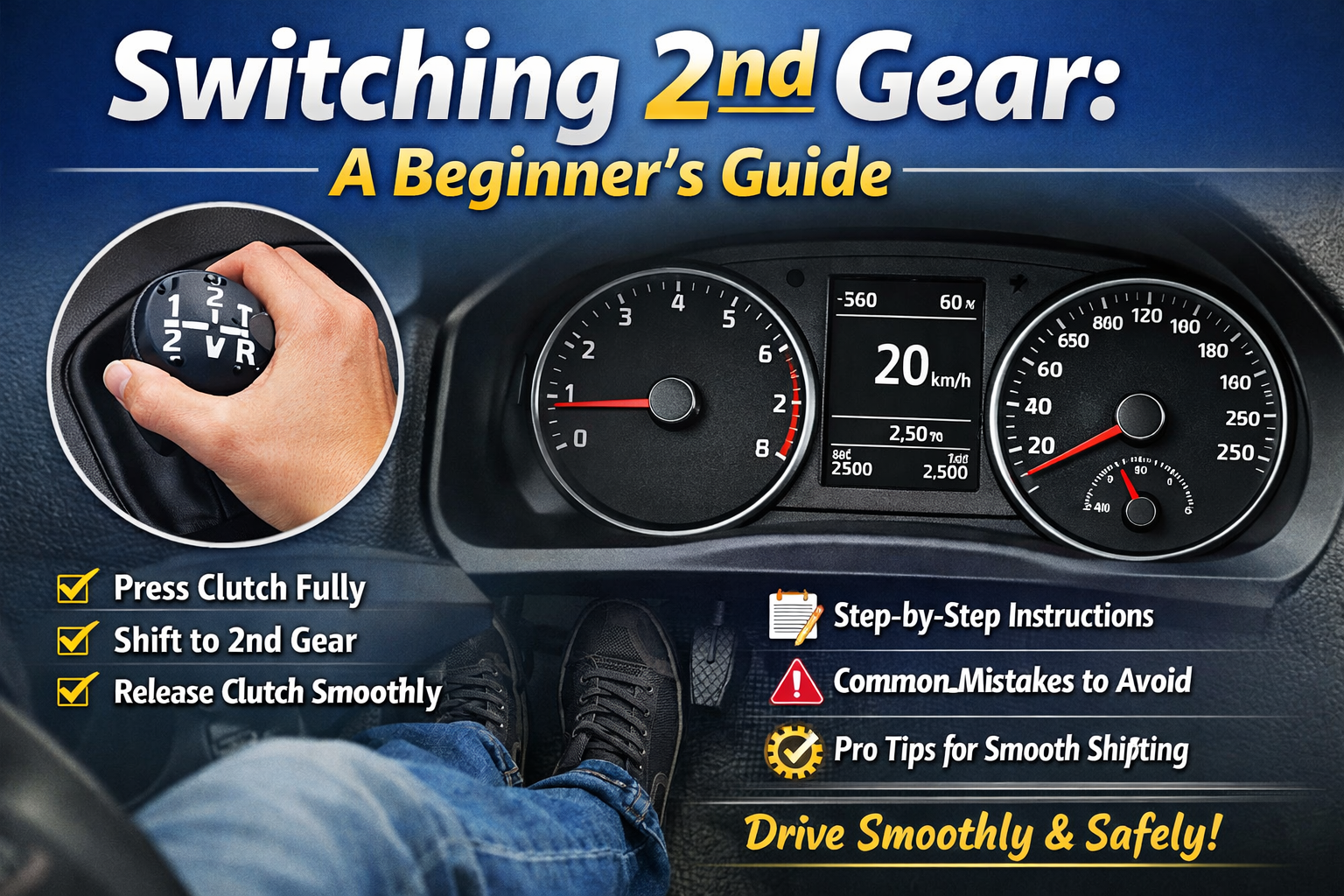
Driving a guided automobile is a precious ability. One of the most crucial parts of guide using is switching 2nd equipment smoothly. Many novices warfare with this step. the car may additionally jerk, make noise, or even stall. But don’t fear — with the proper approach and exercise, you may master it easily.
In this particular guide, you’ll research the whole lot approximately switching 2nd tools. We are able to explain whilst doing it, a way to do it step-through-step, commonplace mistakes, expert recommendations, and answers to frequently asked questions.
Let’s begin.
What Does Switching 2nd Gear Mean?
Switching second gear approach changing from 1st gear to 2nd gear while riding a guide transmission automobile.
- 1st tools are used to begin shifting.
- The 2nd tool is used to boom velocity smoothly after the auto begins rolling.
Switching second is normally the primary gear exchange a driver makes after transferring from a complete stop.
Why Switching 2nd Gear Is Important
Many people think gear adjustments are easy. but switching 2d gear efficaciously may be very crucial for:
- Smooth acceleration
- Better fuel efficiency
- Less engine stress
- Longer clutch life
- Comfortable driving experience
If you do it wrong, you may experience:
- Car jerking
- Engine noise
- Gear grinding
- Clutch damage over time
- So getting to know the right technique is important.
When Should You Switch to 2nd Gear?
Timing could be very important in switching 2d equipment.
You need to generally shift to 2d equipment whilst:
- Your pace reaches around 15–25 km/h (10–15 mph)
- The engine sound will become louder in 1st gear
- The RPM reaches round 2,000–3,000 (for most motors)
Each vehicle is slightly different. So usually concentrate on your engine and sense the car’s reaction.
Step-by-Step Guide to Switching 2nd Gear
Now I’ll break it down into simple steps.
1: Start in 1st Gear
- Press the seize absolutely.
- Positioned the equipment into 1st.
- Slowly launch the take hold whilst lightly urging the accelerator.
- The automobile starts off and evolves to move.
2: Build Some Speed
Let the automobile reach around 15–25 km/h.
Do not live too long in 1st gear. It is best for beginning.
3: Press the Clutch Fully
- Eliminate your foot from the accelerator.
- Press the grasp pedal all of the manner down.
This disconnects the engine from the wheels.
4: Move the Gear to 2nd
- Lightly flow the tools lever from 1st to 2nd.
- Do now not pressure it.
- Ensure the grab is fully pressed.
5: Release the Clutch Smoothly
- Slowly raise your foot off the grab.
- At the same time, lightly press the accelerator.
- Balance each pedal carefully.
If completed efficiently, the automobile will flow easily without jerking.
Common Mistakes While Switching 2nd
Many beginners make these errors:
1. Releasing the Clutch Too Fast
This causes jerking.
2. Not Pressing the Clutch Fully
This can damage gears and purpose grinding noise.
3. Switching Too Early
If the pace is just too low, the auto may also war or shake.
4. Switching Too Late
Excessive RPM in 1st tools wastes fuel and stresses the engine.
5. Looking at the Gear Lever
Usually hold your eyes on the street.
How to Practice Switching 2nd Smoothly
Practice is the key to getting to know switching second tools.
Here are a few useful recommendations:
- Practice in an empty parking area.
- Focus on grasp control.
- Listen to the engine sound cautiously.
- Exercise slow seize launch.
- Live calm and comfy.
With time, your muscle memory will enhance.
Signs You Are Switching 2nd Correctly
You know you are doing it right when:
- The car does not jerk.
- There is no grinding sound.
- The acceleration feels smooth.
- The engine sound stays normal.
- Passengers feel comfortable.
Smooth gear shifting means you are gaining good control.
Understanding Engine RPM and Switching 2nd
RPM (Revolutions according to Minute) tells you how rapid the engine is running.
For most cars:
- Shift from 1st to 2nd at around 2,000–3,000 RPM.
- For fuel saving, shift earlier.
- For faster acceleration, shift slightly later.
Sports cars may behave differently than regular cars.
Switching 2nd in Traffic
Riding in traffic calls for more attention..
Right here’s what you have to do:
- Use 1st tools for very gradual movement.
- Switch to 2nd once traffic moves smoothly.
- If traffic slows down again, you may need to go back to 1st.
Smooth switching helps reduce stress in heavy traffic.
Switching 2nd on an Uphill Road
Shifting on a slope can be tricky.
Follow these tips:
- Build slightly more speed before shifting.
- Release the clutch a bit slower.
- Press the accelerator slightly more than usual.
This prevents the car from losing power.
Switching 2nd in Automatic Cars
Automatic cars shift gears by themselves.
In automatic transmission:
- You do not manually perform switching 2nd.
- The system handles it automatically.
- You only control the accelerator and brake.
Manual driving requires more skill but gives better control.
Manual vs Automatic: Gear Shifting Difference
| Feature | Manual | Automatic |
| Driver controls gears | Yes | No |
| Clutch pedal | Yes | No |
| Skill required | Higher | Lower |
| Control level | More | Moderate |
Switching 2nd is only important in manual transmission vehicles.
How Switching 2nd Affects Fuel Efficiency
Proper gear shifting improves fuel economy.
If you:
- Shift too late → more fuel consumption
- Shift too early → engine strain
- Shift smoothly → better mileage
Driving smoothly saves money in the long term.
Expert Tips for Perfect Switching 2nd
Here are some advanced tips:
- Do not rest your foot on the clutch.
- Do not rush the gear lever.
- Keep both hands steady.
- Avoid aggressive acceleration.
- Exercise balancing seize and accelerator.
Expert drivers are conscious of smoothness, not speed.
Psychological Confidence While Switching 2nd
Many beginners feel nervous.
Remember:
- Jerking happens at first.
- Practice reduces fear.
- Stay patient.
- Avoid panic.
- Self assurance grows with enjoyment.
Frequently Asked Questions (FAQs)
1. At what speed should I switch to 2nd gear?
Generally among 15–25 km/h, relying on the car.
2. Why does my car jerk when switching 2nd?
Maximum possibly you’re releasing the clutch too speedy.
3. Can switching 2nd damage my car?
Only if done incorrectly for a long time.
4. Is switching 2nd different in every car?
Yes, slightly. Each car has different clutch sensitivity.
5. Should I press the accelerator before releasing the clutch?
You should balance both smoothly at the same time.
6. What happens if I skip 2nd gear?
It may paintings in a few instances, but it isn’t always advocated for beginners.
