
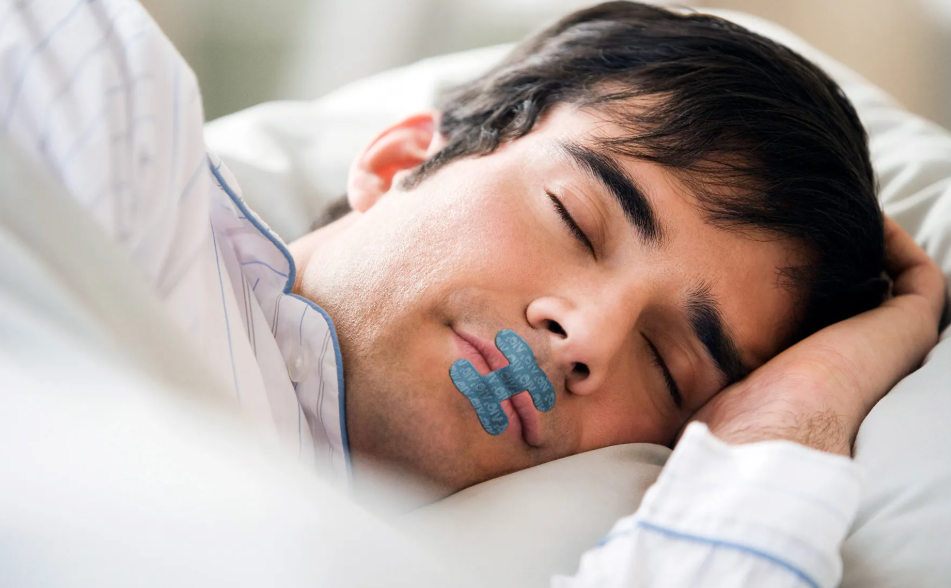
Poor sleep has become so accepted in Australia that most people have stopped asking why it happens. The coffee gets stronger, the workload gets blamed, and exhaustion quietly becomes a personality trait. What rarely enters the conversation is something far more mechanical — the way air actually enters the body during sleep. Mouth tape for sale has attracted real attention lately, and the research behind that interest leads somewhere most people would not expect.
The Nose Does Something the Mouth Cannot
The nasal cavity produces nitric oxide. The mouth produces almost none. This matters more than most people realise, because nitric oxide carries antiviral and antibacterial properties, and every nasal breath delivers a small quantity of it directly into the lungs. Beyond that, research has connected nasal-derived nitric oxide to improved oxygen absorption at a cellular level — not just how much air comes in, but how much the body actually uses. Mouth breathing skips this process entirely. People are getting less from every breath without having any idea it is happening.
Carbon Dioxide Is Not the Enemy
Most people assume better breathing simply means more oxygen coming in. The reality is more layered than that. Carbon dioxide signals the body to release oxygen from red blood cells into surrounding tissue. Strip it out too quickly — which mouth breathing tends to do through over-ventilation — and tissues receive less usable oxygen despite more air moving through the lungs. This is part of why some chronic mouth breathers feel breathless even when they are breathing heavily. The problem is not volume. It is chemistry.
What It Does to the Jaw
Mouth tape is not purely about airways. Its effects reach into territory most people would never anticipate. When the mouth stays open during sleep, the jaw drops and holds an uneven position across the temporomandibular joint for hours at a time. Repeated night after night, this contributes to jaw tension, clicking, and tooth grinding that often gets blamed on stress. Myofunctional therapists and structural osteopaths in Australia are increasingly raising nighttime jaw positioning as something conventional dentistry tends to overlook — and they are finding receptive audiences.
Children Are Disproportionately Affected
Adults dominate most conversations about sleep quality. The consequences of habitual mouth breathing are arguably more serious in children, though. Facial bone structure during early development responds directly to tongue posture and breathing patterns. A child who consistently breathes through the mouth during sleep may develop a narrower palate, altered facial growth, and crowded teeth. Orthodontists see these outcomes regularly. What rarely follows is a conversation tracing them back to breathing. Some researchers have also noted links between chronic mouth breathing and attention difficulties in children, though that work is still unfolding.
The Nervous System Angle
Nasal and mouth breathing do not affect the body in the same way. Nasal breathing, particularly at a slower pace, tends to engage the parasympathetic nervous system — the branch responsible for rest, repair, and digestion. Mouth breathing, especially the shallow and faster kind that often accompanies it, nudges the body toward a sympathetic state instead. Spending a night in a low-grade sympathetic state means the body never fully commits to recovery. That explains why some people feel oddly wired and restless after what should have been enough sleep.
Why Most People Resist Trying It
Mouth tape gets rejected before it gets tested. The concept sounds uncomfortable, and for some people, it sounds outright dangerous. What tends to get left out is that the physical sensation fades quickly once the body adjusts. Most people who expected to find it distressing report that they barely noticed it was there by the following week. The resistance is almost always psychological. The idea is more confronting than the experience.
What to Actually Look For
Tape made specifically for sleep uses a porous, fabric-based material that allows skin to breathe and peels away without pulling. Shape matters more than people realise — a small oval or H-shaped piece positioned across the centre of the lips works far better than a full strip. Strong synthetic adhesives are worth avoiding entirely, particularly for anyone with sensitive skin around the mouth.
Conclusion
The connection between breathing mechanics and sleep quality runs deeper than most people ever investigate. Nitric oxide production, carbon dioxide balance, jaw positioning, nervous system activation — these are not peripheral details. They sit at the core of how thoroughly the body recovers each night. Mouth tape for sale through Australian health and wellness retailers offers a straightforward entry point into something that physiology is increasingly backing. For many people who try it, the results make the case long before the science gets a chance to.
