
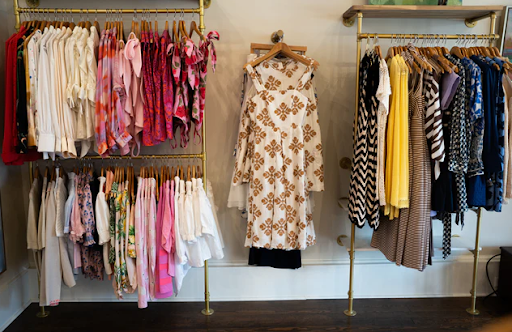
Most women have a wardrobe packed with clothes and still stand in front of it every morning feeling stuck. That is not really a shopping problem. It is a strategy problem — and it usually traces back to where those clothes came from in the first place. Visiting a women’s apparel store that genuinely knows its product and its customers quietly untangles that frustration. Often before the shopper even realises it has happened.
Curation Does the Hard Work
Scrolling through an online marketplace is not shopping. It is searching, and it is exhausting. The results are inconsistent, the sizing is unpredictable, and by the time anything arrives at the door, enthusiasm has already worn thin. Physical stores with strong, experienced buyers do the editing long before a customer walks in. What lands on those racks has already been filtered — for quality, for wearability, for what will still look relevant past the first cold snap. That invisible work saves shoppers from expensive mistakes they would not spot until it was too late to return anything.
Sizing Is Not Universal
Australian women’s bodies are not uniform. Most mainstream retailers stock as though they are, which is part of why so many women leave dressing rooms feeling worse than when they walked in. A specialist retailer carries proportional sizing — garments cut for different torso lengths, varying shoulder widths, different hip-to-waist relationships. The difference between trousers that gap at the back and trousers that simply sit well is not about the woman. It is about the cut. That distinction alone changes everything.
Cheap Clothes Are Rarely Cheap
A blouse worn twice before the seams give out costs far more per wear than a well-made one that holds up season after season. Women’s apparel stores that prioritise construction — reinforced stitching, quality linings, fabric with actual weight and integrity — are the more economical choice in the long run. The maths only looks wrong upfront. Stretched across real usage, durability wins every time. Most people figure this out after one too many disappointing purchases.
Fewer Choices, Better Decisions
There is a reason professional stylists do not shop on behalf of clients in overwhelming department stores. Too many options cause decision fatigue. When everything is available, nothing stands out and shoppers default to something safe, forgettable, or slightly wrong. A tightly edited store forces a different kind of attention. Fewer racks mean the eye actually settles. Strange as it sounds, constraint often produces bolder, more considered choices than abundance ever does.
Wardrobes That Actually Connect
A wardrobe that works is not necessarily a large one. It is a connected one. Women’s apparel stores with staff who understand their product often point out pairings a customer would never have thought of independently — a structured jacket that moves from a morning meeting to an evening out without missing a beat, a wrap dress that reads entirely differently depending on the shoes beneath it. These are not styling gimmicks. They are the practical result of shopping somewhere that understands how women actually move through their days.
Sustainability Needs Scrutiny
The word sustainable has been stretched so thin it barely carries meaning anymore. Genuinely responsible women’s retailers are transparent about where their garments come from, who made them, and under what conditions. They stock certifications that hold up under examination — not just a recycled hangtag or a soft-focus marketing claim about the environment. Shoppers who care about this are getting sharper at telling the real thing from the performance of it. The stores doing it properly tend to become obvious quite quickly.
Loyalty Goes Both Ways
There is a particular kind of ease that comes from walking into a store where staff already know that you hate anything scratchy near the collar or that you have been searching for the right winter coat for ages. That accumulated knowledge builds quietly across visits. It changes the shopping experience in ways that feel small individually but add up to something genuinely useful. Algorithms have been trying to replicate it for years. They have not quite managed it yet.
Conclusion
Getting dressed should not feel like solving a problem every morning, but for many women it does. Usually because the wardrobe behind those choices was built without much thought or intention. A women’s apparel store worth returning to shifts that pattern over time. It brings together fit, construction, real expertise, and service that is honest rather than transactional. That combination does not just improve what hangs in a wardrobe. It changes the relationship a woman has with getting dressed altogether — and that is the kind of shift that quietly sticks.
