
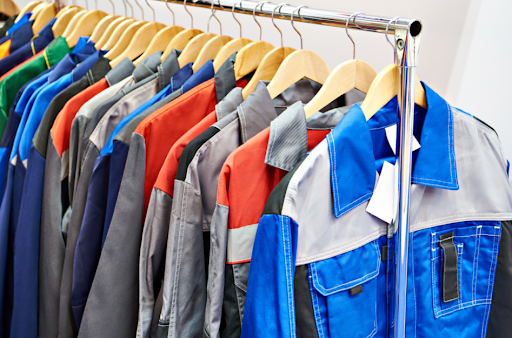
Most businesses pour serious money into websites, signage, and social media. Then they send their team out in faded, mismatched clothing that quietly undoes all of it. This pattern plays out constantly across Australian industries, and most owners never connect the dots. Workwear clothes, chosen with genuine intention, do a job that goes far beyond simply covering the body.
First Impressions Hit Hard
People form opinions faster than most workers realise when they’re focused on getting the job done. On a job site or in a service setting, that judgement lands before anyone has spoken. A clean, properly fitted uniform signals structure and accountability without a single word exchanged. Worn-out or mismatched clothing sends the opposite message — and solid work rarely fully reverses a poor visual impression once it has settled in someone’s mind.
Safety Is More Than Hi-Vis
High-visibility gear keeping workers seen in dangerous environments — everyone understands that part. What gets far less attention is how specific design decisions determine whether workwear actually performs under real conditions. Fabric weight, seam placement, ventilation positioning, and closure types all matter in ways that aren’t obvious from a product photo. A garment that’s technically compliant but restricts shoulder movement or traps body heat through a summer shift isn’t solving a safety problem. It’s creating a different one.
Durability Isn’t Accidental
Workwear clothes that fall apart after a months are a problem. They make the team look inconsistent. This is because the clothes are not made well. They do not have seams or good fabric. Businesses that buy workwear clothes have to keep replacing them. This does not solve the problem.
Comfort Affects More Than Mood
Serious athletes obsess over what they wear during performance for a real reason. Discomfort pulls focus away from the task in ways that are subtle but constant. Workers managing restricted movement, trapped heat, or poorly placed seams throughout a shift carry a small distraction that compounds across a full working day. Properly designed workwear clothes are built around how the body actually moves during specific work — not how the garment looks in a catalogue. That distinction matters more than most purchasing decisions account for.
Branded Workwear Works Quietly
A uniformed team moving through a suburb or parked outside a client’s property is generating brand impressions without trying. Digital advertising competes for attention in an overcrowded, noisy feed. A well-presented worker in branded clothing exists in the physical world where attention is less fragmented. Trade businesses consistently underestimate how much passive brand exposure a consistently dressed team generates. They’re doing it simply by showing up and doing the work.
Uniforms Shape Team Culture
Shared clothing creates shared identity. Shared identity quietly shapes how people behave on the job. Teams in uniform tend to hold each other to a higher standard because the clothing represents something collective rather than individual. There’s also a practical side that gets overlooked. Knowing exactly what to wear before a shift removes a small but genuine daily friction. Removing those small friction points from the start of a working day has a real effect on how people arrive mentally and carry themselves through it.
Compliance Shifts Over Time
Australian workplace safety legislation evolves, and what met the required standard several years ago may no longer be sufficient today. Businesses operating across multiple states face added complexity because requirements aren’t always nationally consistent. Workwear procurement that ignores current standards creates legal exposure that most businesses only discover after something has gone wrong. By that point, the oversight costs far more than any compliance review would have.
Conclusion
Workwear clothes sit at the intersection of safety, brand perception, team culture, and legal compliance. Most Australian businesses treat them as an afterthought. The ones that get it right aren’t just better dressed — they’re operationally sharper and better protected. In industries where trust is hard-won and competition is tight, what a team wears on the job is never just a uniform. It’s a direct reflection of how seriously the business takes everything else it does.
