
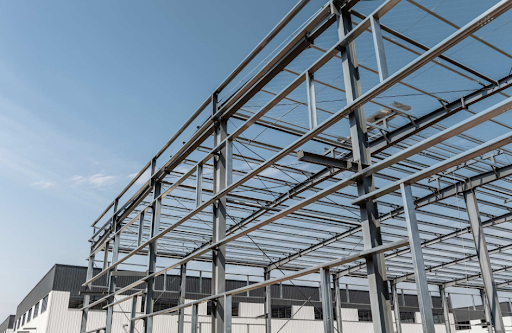
Drive past any active construction site in the UK and you’ll spot it — that exposed steel skeleton rising before anything else does. Walls come later. Glass comes later. But the steel? It goes up first, and for good reason. Structural steel fabrication in UK workshops is the quiet engine behind some of the country’s most demanding builds, yet most people never give it a second thought. That’s worth changing, because what actually happens during fabrication shapes whether a project runs smoothly or falls apart before the roof goes on.
Tolerances Nobody Talks About
Steel fabrication looks straightforward from the outside — cut the metal, weld it, send it out. But experienced fabricators know the real pressure sits in the tolerances. A beam that arrives fractionally out of spec creates alignment problems that ripple across an entire floor. Nobody budgets for that kind of remedial work, and nobody wants to explain it to the client. Hitting consistent accuracy across hundreds of components, project after project, is genuinely difficult. It separates workshops that know what they’re doing from those that are simply hoping nothing goes wrong on-site.
Off-Site Work Drives On-Site Speed
A common assumption is that construction speed is mostly determined by what happens on-site. With steel-framed buildings, that thinking is back to front. The programme often lives or dies in the fabrication workshop. When structural steel fabrication in the UK is properly sequenced, components arrive pre-drilled and pre-treated, ready to bolt straight into position. Groundworks run in parallel. Site crews aren’t standing around waiting. The whole build compresses in a way concrete construction simply can’t match. Contractors who understand this stop treating fabrication as a supplier decision and start treating it as a programme strategy.
Recycling Goes Deeper Than People Think
The sustainability story around steel usually stops at ‘it’s recyclable.’ That tells maybe half the story. Steel doesn’t lose structural grade when it’s recovered and reprocessed — it comes back performing exactly as it did the first time. A beam fabricated today could, decades down the track, end up in a completely different building without any performance loss. UK fabricators have been working with recovered structural steel for years. For clients trying to hit embodied carbon targets, that’s not a minor footnote. It’s a central part of the environmental equation.
The Expertise Behind the Machines
Automated cutting lines and CNC machinery get most of the attention, but the people running those machines matter just as much. Certified welders, detailers who understand how connections carry load, shop managers who can read a drawing and catch a coordination problem before it becomes a site crisis — that knowledge took years to build. The UK has a genuine concentration of this expertise. Choosing a domestic fabricator isn’t just about logistics. It’s about getting people on your team who’ve seen problems before and know how to avoid them.
Connections Are the Real Test
Structural engineers understand something that rarely surfaces in general conversation — the vulnerable points in any steel structure are almost never the main members. They’re the connections. How a beam transfers load to a column, how a brace fixes at an angle, how a base plate sits on its foundation. These details dictate how the structure actually behaves under load. Quality steel fabrication across the UK treats connections with the same rigour as everything else. Cutting corners here — undersized welds, misaligned bolt groups — creates problems that are slow to spot and expensive to fix.
BIM Changed the Workshop Floor
Building Information Modelling quietly transformed how fabrication actually works. A well-coordinated BIM model lets fabricators generate production drawings with far less back-and-forth, clash-check connections against building services before anything gets cut, and feed data directly into CNC machinery. Projects that integrate design and fabrication through BIM run measurably differently from those that treat them as separate conversations. The UK was an early adopter of this approach, and the workshops that fully committed to it are now operating at a level that older workflows can’t touch.
Fire Protection Gets Left Too Late
Steel conducts heat fast, so fire protection on structural applications isn’t optional — everyone knows that. What catches projects off guard is the sequencing. Intumescent coatings applied inside a fabrication workshop, under controlled conditions, consistently perform better than coatings applied on a busy site. They’re also far easier to inspect properly. Yet fire protection still gets pushed late on too many projects, turning into a programme headache and sometimes a quality compromise. The fabricators who schedule it into production from the start rarely have that conversation. The ones who don’t always seem surprised when it causes delays.
Conclusion
Structural steel fabrication in UK construction does its best work invisibly. By the time a building is finished, nobody can see the tolerances, the connection details, or the fire protection applied in the workshop. What they can see is whether the project landed on time and whether the structure holds up. Those outcomes trace back directly to decisions made long before any steel left the factory floor. That’s the part worth understanding — and the part most people never bother to look at.
