
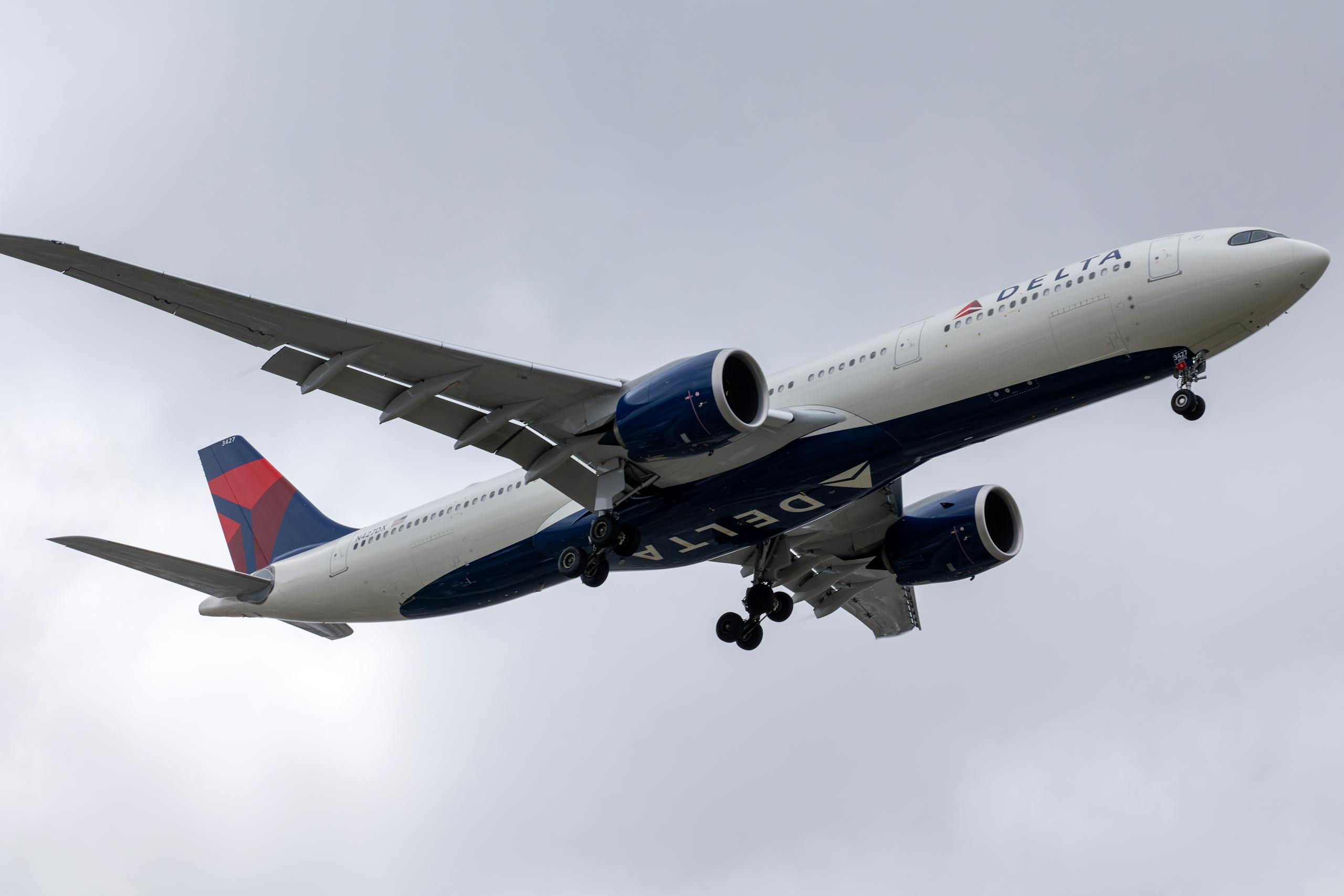
On May 28, 2025, Delta Air Lines Flight DL275 — a long-haul service from Detroit (DTW) to Tokyo Haneda (HND) — made an unexpected emergency diversion to Los Angeles International Airport (LAX) after a safety issue surfaced mid-flight. What began as a typical trans-Pacific journey turned into a well-handled aviation safety case that highlights modern airline protocols and the importance of prioritizing passenger safety above schedules. (Aviation A2Z)
This article explains why Delta Flight DL275 diverted to LAX, what caused the diversion, why LAX was chosen, how passengers were affected, and what experts say about this incident.
Flight Overview: DL275 and Its Planned Route
Delta Flight DL275 was scheduled to depart from Detroit Metropolitan Wayne County Airport (DTW) en route to Tokyo Haneda Airport (HND) — one of the airline’s major trans-Pacific services. The aircraft assigned was an Airbus A350-900, one of Delta’s most advanced long-haul jets designed for efficiency, comfort, and extended over-water flights. (Techrab)
Shortly after takeoff, the flight climbed to its cruise altitude of around 38,000 feet and set a steady path toward Asia. However, about five hours into the flight, something caught the flight crew’s attention. (The Tundra Drums)
What Triggered the Diversion to LAX?
The diversion was triggered by a malfunction in the engine’s anti-ice system — a critical safety feature on high-altitude flights, especially over icy conditions like those found above the North Pacific Ocean. This system prevents ice from forming on engine parts, which can affect performance or lead to more serious issues if ignored. (Aero Online)
According to aviation reports, onboard sensors detected irregularities in the Rolls-Royce Trent XWB engine’s anti-ice function roughly 620 nautical miles southwest of Anchorage, Alaska. Because continuing across the vast Pacific without a fully functioning anti-ice system posed risk, the pilots, in coordination with Delta’s operations team, decided to divert to the nearest major airport with full maintenance support: LAX. (The Tundra Drums)
Why LAX Was the Best Diversion Option
At first glance, diverting all the way to Los Angeles — far from the original flight path — might seem surprising. But aviation decision-making prioritizes safety and operational support options, and LAX offered several distinct advantages:
- Full Support Infrastructure: LAX is a major Delta Air Lines hub with dedicated facilities for Airbus A350-900 aircraft and certified Rolls-Royce engine technicians.
- Maintenance Capability: Specialized teams and parts are on hand at LAX, ensuring an efficient inspection, repair, and technical resolution.
- Passenger Handling: With extensive international connections and service teams, LAX could accommodate passengers far better than smaller diversion airports.
- Runway Length & Safety: LAX has long runways capable of handling heavy long-haul jets safely, even under diversion conditions. (Bee Magazine)
Together, these factors made LAX the best choice over closer airports like Anchorage or Seattle, which may not have had the same depth of resources available. (Bee Magazine)
Safe Landing and Immediate Response at LAX
Delta Flight DL275 landed safely at 01:08–01:38 AM local time on May 28, 2025, on Runway 06R at LAX after a flight time of about 12 hours and 15 minutes. There were no injuries reported among passengers or crew — a testament to effective crew training and emergency protocols. (The Tundra Drums)
After landing, the aircraft was guided to a gate where ground engineering teams immediately began diagnostic work. Emergency responders were on standby, as is standard protocol for technical diversions, but their presence was ultimately precautionary. (Bee Magazine)
Passenger Experience During the Diversion
Passengers described a calm and professional atmosphere. The captain made repeated announcements explaining that the diversion was precautionary due to a mechanical concern — specifically the anti-ice system — and that safety was the priority. Many travelers continued using inflight entertainment, stretching their legs, or chatting with crew. (Bee Magazine)
On landing, Delta staff provided support with:
- Rebooking onto alternate flights
- Hotel accommodations and meal vouchers
- Assistance for onward travel
Passengers praised the professionalism and communication throughout the incident. Even though the diversion disrupted travel plans, many acknowledged the importance of safety above all. (Bee Magazine)
Technical Explanation: What the Anti-Ice System Does
The anti-ice system on modern jet engines like the Rolls-Royce Trent XWB helps prevent ice from forming on engine components when flying through freezing air layers at high altitude. Ice buildup can disturb airflow, reduce thrust, or even cause engine surges. (Aero Online)
Although cruising at around -50°C and thousands of feet above sea level, ice formation is a real hazard. Losing part of the anti-ice capability means increased risk if the issue worsens. Therefore, crews treat such anomalies seriously, especially over remote oceanic routes where emergency landing choices are limited. (Aero Online)
Operational Impact and Financial Cost
A diversion of this scale has financial and logistical consequences:
- Fuel burn from redirecting the flight
- Landing and airport handling fees
- Hotel, meal, and passenger care costs
- Rebooking and crew rescheduling
- Inspection and maintenance costs for the aircraft
Industry insiders estimate the total direct and indirect cost of the DL275 diversion to be in the multi-million-dollar range, reflecting aircraft support, passengers’ needs, and lost revenue on the canceled Tokyo leg. (List of information)
Aviation Safety Lessons from DL275’s Diversion
Experts say the DL275 event reinforces how crucial aviation safety culture is. Airlines operate with multiple layers of monitoring and redundancy. Diversions are not signs of failure but of precaution and risk aversion. Trends in aviation increasingly involve predictive maintenance — using real-time data and AI to flag potential issues before takeoff — which might prevent similar problems in the future. (Most Valued Business)
Predictive systems could alert ground engineers to a developing anti-ice fault during pre-flight checks, potentially avoiding diversions entirely. Such technology is a growing trend in modern airline operations worldwide. (Most Valued Business)
Conclusion: Safety First on Delta Flight DL275
The event of Delta Flight DL275 diverted to LAX highlights the airline industry’s core priority — safety over schedule or convenience. An Airbus A350-900 en route for Tokyo was diverted mid-flight due to an anti-ice system malfunction, and the flight crew, airline operations teams, and ground crews coordinated flawlessly to ensure a safe outcome. (Travel And Tour World)
Although passengers experienced delays and plan changes, the incident remains a strong example of how modern aviation handles unexpected technical concerns with professionalism and care. As predictive maintenance and digital monitoring continue to evolve, the frequency of such mid-air corrections may decline, but the priority will always remain the same: getting everyone home safely.
Frequently Asked Questions (FAQs)
Why was Delta Flight DL275 diverted to LAX?
Delta Flight DL275 was diverted to Los Angeles due to a technical issue with the aircraft’s engine anti-ice system detected during the flight.
Was Delta Flight DL275 an emergency landing?
It was a precautionary emergency diversion. The pilots followed safety protocols to ensure passenger and crew safety.
Were passengers safe on Delta Flight DL275?
Yes, all passengers and crew were completely safe, and no injuries were reported during or after the diversion.
What aircraft was operating Delta Flight DL275?
The flight was operated using an Airbus A350-900, one of Delta Air Lines’ most advanced long-haul aircraft.
Why did the flight divert to Los Angeles instead of another airport?
LAX was chosen because it has full maintenance facilities, long runways, and specialized support for Airbus A350 aircraft.
Did Delta provide assistance to passengers after the diversion?
Yes, Delta Air Lines arranged rebooking, hotel accommodations, meals, and travel support for affected passengers.
Is it common for international flights to divert?
While not frequent, diversions do happen and are a normal part of aviation safety procedures when potential issues arise.
