
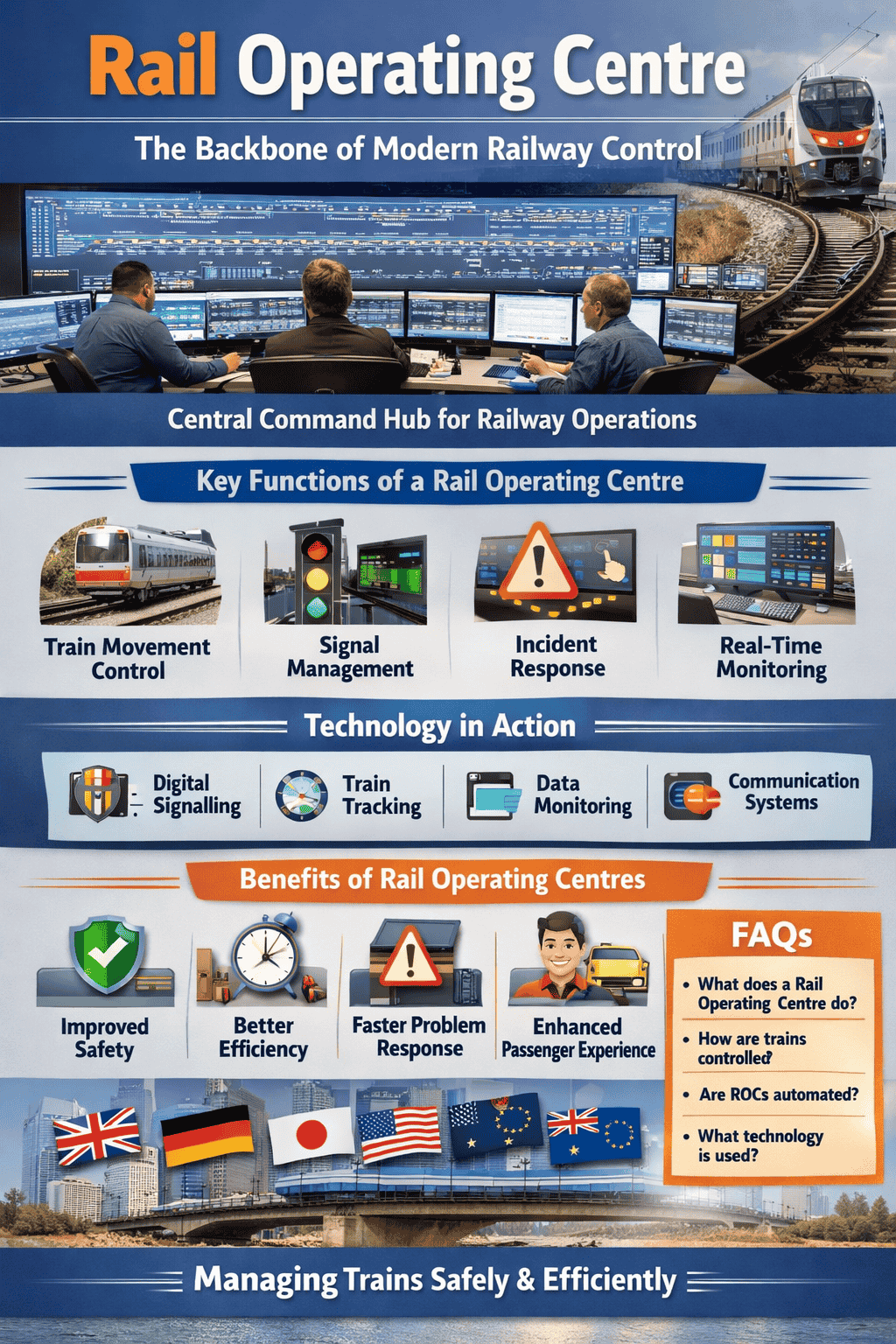
Rail delivery systems are complicated networks that require steady monitoring, coordination, and decision-making. From controlling train actions to coping with disruptions and making sure passenger protection, many procedures need to paintings together smoothly. this is where a rail working centre performs a essential position.
A rail operating centre acts because the command hub of a railway community. It brings together diverse operational teams, technology, and communique systems to control teach services efficaciously. cutting-edge rail systems round the arena rely on these centres to keep reliability, safety, and punctuality.
In this newsletter, we are able to explore what a rail running centre is, the way it works, its key functions, advantages, and why it’s far critical for cutting-edge railway operations.
What is a Rail Operating Centre?
A rail working centre (ROC) is a centralized control facility in which railway operations are monitored and controlled in real time. it’s far the primary area where groups oversee educate actions, tune situations, signalling structures, and emergency responses.
Historically, railway operations were managed via multiple smaller control rooms unfold across exclusive locations. but, modern-day railway structures have shifted to centralized rail working centres to enhance coordination and performance.
Internal a rail operating centre, advanced virtual systems and skilled operators paintings together to ensure trains run effectively and on schedule.
Why Rail Operating Centres Are Important
Railways serve hundreds of thousands of passengers and shipping massive amounts of shipment each day. with out right coordination, even small disruptions may want to motive important delays across the community.
A rail operating centre helps prevent and manage these issues by:
- Monitoring train movements continuously
- Coordinating communication between railway staff
- Coping with surprising disruptions
- Improving protection throughout the community
- Ensuring trains follow schedules
Because the whole thing is controlled from one area, selections may be made quicker and greater efficiently.
Key Functions of a Rail Operating Centre
A rail operating centre performs several important functions to keep the railway system running smoothly.
1. Train Movement Control
One of the main tasks of a rail operating centre is controlling train movements across the network.
Operators monitor:
- Train locations
- Track occupancy
- Train speeds
- Platform availability
The use of advanced manage structures, operators make certain trains circulate thoroughly and avoid conflicts at the tracks.
2. Signal and Track Monitoring
Railway indicators and tracks are critical for safe educate operations. Inside a rail operating centre, signalling systems are monitored in real time.
Operators can:
- Control signals remotely
- Detect track issues
- Manage track switches
- Prevent potential collisions
This centralized monitoring helps reduce risks and improves railway safety.
3. Managing Service Disruptions
Railway networks can face disruptions due to numerous motives, which include:
- weather situations
- Technical disasters
- Track preservation
- Accidents
When disruptions occur, the rail running centre coordinates the reaction. groups examine the scenario and determine the nice course of motion to minimize delays and hold passengers knowledgeable.
4. Communication Coordination
A rail working centre acts as a conversation hub among exceptional railway departments.
It connects:
- Train drivers
- Station staff
- Maintenance teams
- Emergency services
Clean and rapid conversation ensures that everybody concerned in railway operations can respond quickly whilst wanted.
5. Passenger Information Management
Presenting correct facts to passengers is every other crucial obligation.
The rail operating centre helps update:
- Train arrival and departure times
- Platform changes
- Delay notifications
- Carrier announcements
This information is shared via station presentations, cell apps, and statement structures.
Technologies Used in a Rail Operating Centre
Contemporary rail operating centres rely upon superior technology to manipulate railway operations correctly.
A number of the important thing technology include:
Advanced Signalling Systems
Digital signalling systems help manage teach moves and ensure secure spacing between trains.
Real-Time Monitoring Software
Operators use specialized software to music educate positions and display network situations.
CCTV Surveillance
Cameras hooked up throughout stations and tracks permit operators to display activities and reply to incidents.
Communication Networks
Reliable conversation systems join drivers, stations, and control groups.
Data Analytics
A few rail running centres use information evaluation to predict capability disruptions and enhance scheduling.
How a Rail Operating Centre Works (Step-by-Step)
Know-how how a rail operating centre operates can assist give an explanation for its importance.
1: Monitoring the Network
Operators constantly monitor the entire railway network through digital displays and manage structures.
They track:
- Train locations
- Track conditions
- Signal status
2: Managing Train Schedules
Operators make sure that trains follow the planned timetable. If delays occur, they modify schedules to lessen disruptions.
3: Controlling Signals and Routes
The use of signalling systems, operators set educate routes and manage song switches to avoid conflicts among trains.
4: Responding to Incidents
If a hassle takes place, which include a sign failure or track blockage, the rail working centre coordinates the response.
They communicate with:
- Train drivers
- Maintenance teams
- Emergency offerings
5: Updating Passenger Information
As soon as choices are made, the centre updates passengers through digital systems and announcements.
Benefits of a Rail Operating Centre
Rail working centres provide several advantages for railway networks.
Improved Safety
Centralized tracking facilitates hit upon capacity dangers early and prevent accidents.
Better Coordination
Having multiple groups in one region improves conversation and decision-making.
Faster Response to Problems
Operators can speedy pick out issues and take action to decrease delays.
Efficient Train Operations
Rail running centres help keep clean educate schedules and decrease congestion.
Enhanced Passenger Experience
Accurate data and better service control improve the overall journey revel in.
Challenges Faced by Rail Operating Centres
Even though rail operating centres provide many benefits, in addition they face sure challenges.
System Complexity
Modern railway systems contain many technologies that must work together seamlessly.
Cybersecurity Risks
Virtual structures can be vulnerable to cyber threats, requiring robust security features.
High Setup Costs
Constructing and keeping a rail working centre calls for large investment.
Managing Large Networks
Some rail networks cover huge regions, making coordination greater difficult.
The Future of Rail Operating Centres
Rail operating centres hold to adapt with new technologies.
Future developments might also encompass:
- Artificial intelligence for predictive upkeep
- Computerized educate operations
- Advanced records analytics
- Clever rail networks
Those innovations will similarly improve railway protection, efficiency, and reliability.
As railway demand grows, rail operating centres turns into even extra vital in dealing with modern-day delivery systems.
FAQs About Rail Operating Centres
What is a rail operating centre?
A rail operating centre is a centralized manipulate facility that manages teach operations, signalling systems, and conversation across a railway community.
What does a rail operating centre do?
It video display units educate moves, controls indicators, manages disruptions, coordinates communique, and affords passenger facts.
Why are rail operating centres important?
They enhance railway safety, make sure smooth operations, reduce delays, and help control big railway networks efficiently.
What technology is used in a rail operating centre?
Rail operating centres use signalling structures, monitoring software program, communication networks, CCTV structures, and records analytics tools.
How do rail operating centres improve passenger experience?
They assist preserve educate schedules, manage delays speedy, and provide accurate journey statistics to passengers.
Conclusion
A rail running centre is the spine of cutting-edge railway operations. via centralizing manipulate and coordination, it permits railway networks to feature effectively and effectively.
These centres reveal train actions, control signals, coordinate group of workers, and respond to disruptions in real time. With the help of superior technologies and skilled operators, rail working centres make sure that trains run smoothly and passengers reach their locations accurately.
As railway systems continue to grow and evolve, the role of the rail running centre becomes even extra important in shaping the destiny of transportation.
