
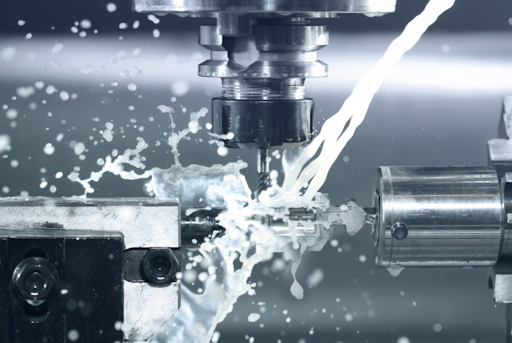
Most people outside the industry picture precision manufacturing as expensive machines doing expensive things. The reality is more specific. The reason aerospace components, surgical instruments, and automotive parts arrive within tolerance — consistently, across large volumes — comes down to process discipline. CNC machining services are where that discipline actually lives. Not in the brochure version, but in the daily reality of holding tight tolerances across materials that don’t always cooperate, on deadlines that don’t shift.
What Manual Machining Couldn’t Solve
Manual machining didn’t become inadequate because machinists lacked skill. It became inadequate because skill alone cannot guarantee repeatability. A machinist producing the same part across an extended run will introduce small variations — not through carelessness, but through fatigue, perceptual drift, and the physical limits of human consistency. CNC removes that drift entirely. The programme doesn’t tire. In industries where a component failing in the field carries serious consequences, that consistency isn’t a minor improvement. It’s the whole point.
Tolerances That Actually Mean Something
Tolerance specifications on engineering drawings aren’t conservative suggestions. They reflect the functional limits of the part. A bearing housing machined slightly outside its specified diameter won’t fail during inspection — it’ll fail in service, under load, when replacement is expensive and downtime is worse. CNC machining services hold these tolerances not occasionally but reliably, across entire production runs. That’s what transforms a tolerance from a number on a drawing into a genuine guarantee about how the finished part behaves in the real world.
Why Material Choice Gets Complicated
Titanium machines differently depending on ambient conditions. Certain engineering plastics deflect under cutting pressure in ways that throw final dimensions out even when the toolpath looks correct. Hardened tool steel eats through cutting inserts at rates that need accounting for before the first cut runs. CNC machining services working at a serious level factor all of this in — thermal compensation, adaptive feed control, tooling strategies matched specifically to the alloy or material being cut. Operators who treat every material the same way produce parts that look right until someone actually measures them.
Multi-Axis Machining Changes Everything
A part that once required several separate setups — each introducing its own alignment error — can now be completed in a single operation on a multi-axis machine. That’s not just a time saving. Every setup transfer is an opportunity for cumulative error to enter the part. When complex geometry gets produced in one continuous operation, those opportunities disappear. Features that were previously difficult to hold in tolerance become straightforward. Designs that engineers once simplified just to accommodate manufacturing constraints can finally be produced as originally intended.
Prototyping Without the Guesswork
There’s a version of prototyping that produces parts which look like the design but don’t behave like it. Soft tooling and manually produced one-offs have their place, but they don’t reveal how the final part will perform under real cutting conditions. CNC-machined prototypes do. The same feeds, speeds, and tooling strategies used in production apply at the prototype stage. Design decisions get made on accurate information rather than optimistic approximations — and that difference shows up later, when it matters most.
Where Scrap Rates Actually Come From
Scrap in precision machining rarely comes from catastrophic failure. It accumulates through small, consistent errors — a tool that ran slightly longer than it should have, a fixturing approach that introduced vibration, a feed rate that caused chatter in the actual material rather than the theoretical one. Manufacturers who keep scrap rates low treat process optimisation as an ongoing discipline. Not a setup-and-forget exercise. That distinction separates shops that quote confidently from shops that quietly absorb rework into their margins.
Conclusion
Precision manufacturing punishes assumptions and rewards genuine process knowledge. That’s not a philosophical position — it shows up in the reject pile at the end of a production run. CNC machining services, applied with real technical rigour, separate components that perform reliably in the field from ones that merely pass initial inspection. For Australian manufacturers working across demanding sectors, the difference between adequate machining and excellent machining becomes visible exactly where it matters — in the longevity, reliability, and real-world performance of every finished part.
