
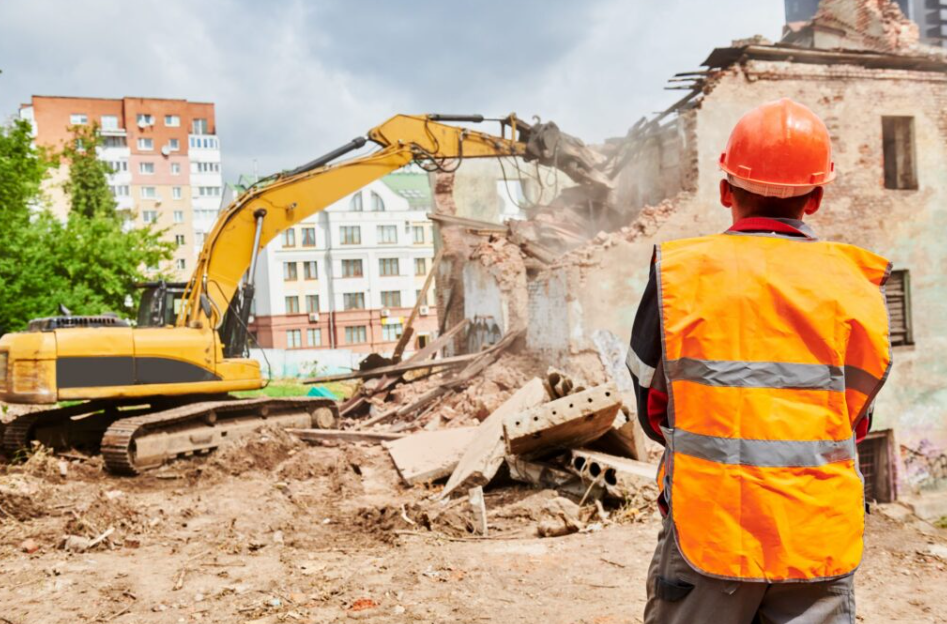
Demolition looks brutal from the outside. A building comes down, rubble gets cleared, and the site moves on. What that picture misses is the chain of decisions happening between those moments — decisions that go wrong far more often than anyone publicly admits. Demolition training is what turns a dangerous guess into a calculated action. And in this industry, that difference tends to show up fast.
Buildings Fight Back When You Demolish Them
A standing building is a system. Every wall, beam, and floor is sharing load with something else. Start pulling that system apart and it does not behave predictably — it shifts. Stress moves to wherever the building still has structure left. Trained workers are taught to demolish in sequence, essentially reversing the construction order. Skip that sequence and odd things start happening. A floor sags on the far side of the site. A wall that looked solid the day before starts leaning overnight. Most of these warning signs get missed by untrained eyes because they do not look dramatic. They just look like a tired old building.
Asbestos Is Still Everywhere
Here is what the standard safety poster does not show: asbestos does not always look like fraying insulation wrapped around a pipe. In older Australian buildings, it turns up as textured ceiling coatings that have been painted over so many times the original surface is unrecognisable. It is in vinyl floor tiles. It is in roofing sheets that look like ordinary corrugated iron from the ground. Workers who only know the obvious examples miss the less obvious ones constantly. Demolition training specifically covers the full range of how these materials appear across different construction eras, because recognising them across all their forms is where the real protection comes from — not just knowing that asbestos exists.
Licensing Rules Have Quietly Shifted
A lot of experienced workers are operating on outdated assumptions about what their credentials actually cover. Licensing thresholds have been quietly tightened across various Australian states over recent years. Work that previously only required a basic site induction now needs a formally ticketed supervisor present. This has caught plenty of people off guard — not because they are careless, but because the changes happened gradually and without much fanfare. Turning up to a site and discovering mid-morning that your qualifications no longer meet the current requirement is a poor way to find out.
Your Ticket Affects Your Employer’s Insurance
This rarely gets mentioned in job briefings. When an incident occurs on a demolition site and investigators find that workers held inadequate or lapsed credentials, insurance claims get complicated quickly. Insurers reduce payouts. Sometimes they reject them entirely. What many workers do not realise is that the liability does not always stop at the business owner — in certain circumstances, individuals can be drawn into civil proceedings too. Structured demolition training creates a paper trail. That trail is not just bureaucratic record-keeping. It is the thing that protects everyone on the site when something goes wrong and the questions start.
Machine Operation Is More Nuanced Than It Looks
Watching a demolition excavator work looks mechanical. Repetitive, even. What is actually happening is more like a constant conversation between the operator and the site. The operator is reading ground movement beneath the tracks. Adjusting for underground services that may not be accurately marked on the plans. Communicating bucket angle to ground workers through machine positioning rather than radio calls, because radio is often useless on a noisy site. None of that gets developed by sitting in a cab unsupervised for months. It comes from structured instruction, and then from supervised practice where someone is actually watching and correcting in real time.
Site Communication Has Its Own Language
Talking on a demolition site is harder than it sounds. Between machinery noise, dust, and respiratory protective equipment, verbal instruction breaks down quickly. Trained workers learn standardised signal systems that plant operators and ground crew both understand without a word being spoken. They know where to stand so they remain visible to an excavator operator who has limited sightlines. They can read a site plan and anticipate where the next machine movement will be — rather than reacting to it after it has already started. That anticipation is not instinct. It is something taught.
Conclusion
What separates a well-trained demolition worker from one who simply has experience is not confidence. Experience builds confidence regardless of quality. What training builds is accuracy — in reading a site, sequencing a job, identifying what others walk past, and knowing exactly where legal and personal exposure begins. Demolition training does not just qualify someone for the work. It changes how they see it. And in an industry where the consequences of not seeing clearly tend to arrive without much warning, that shift matters more than most people give it credit for.
