
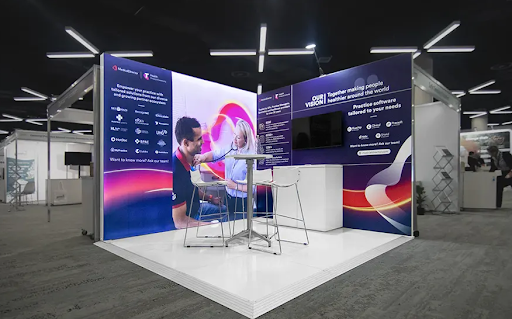
Walk the floor of any major trade show in Australia and the difference between prepared exhibitors and unprepared ones is obvious within minutes. Tangled cables, panels that won’t align, backdrops half-assembled ten minutes before doors open — these aren’t rookie mistakes. They’re what happens when businesses think about their display but forget about everything that surrounds it. Portable exhibition stands exist because the real challenge of exhibiting isn’t the design. It’s everything else.
The Logistics No One Warns You About
Traditional displays travel as freight. That means carriers, crates, loading dock bookings, and timelines that almost never align cleanly with exhibition schedules. When something gets delayed or damaged in transit, there’s no good solution — just damage control. Portable stands travel with the exhibitor directly, which cuts out an entire layer of logistics that regularly causes problems nobody budgeted for.
Bump-In Is Chaotic by Nature
Bump-in periods are genuinely stressful. Other exhibitors are building around you, the venue is loud, and the available time shrinks faster than expected. A stand that goes up without tools or a manual isn’t just a convenience — it’s protection against things going sideways during an already high-pressure window. Experienced exhibitors know this. First-timers usually learn it the hard way.
Weight Is Underestimated
Lightweight construction sounds like a minor selling point until someone on the team hurts themselves hauling display hardware up a loading ramp. Portable exhibition stands built from aluminium frames and tension fabric shift the physical demand dramatically. One person can manage the entire setup without assistance. For smaller businesses attending events regularly throughout the year, that has real implications for how teams are structured and how much the whole exercise actually costs in time and effort.
Durability Shows Up Later
A portable stand gets packed, unpacked, transported, assembled, disassembled, and stored more times than most people anticipate when they first purchase one. The graphics hold up reasonably well. What gets tested repeatedly are the locking mechanisms, tension clips, and connector joints. Good stands are built with those stress points in mind. The difference between quality and cheap becomes invisible at the first show and painfully obvious several events down the track.
Flexibility Changes Exhibition Strategy
When a display is rigid and expensive to modify, businesses default to using the same setup everywhere regardless of whether it actually fits the event. A boutique industry breakfast and a large national expo are completely different environments, and treating them identically wastes opportunity. Portable exhibition stands allow components to be reconfigured and graphics to be swapped out so the stand can be scaled and adapted properly. That shifts the mindset from “making do” to genuinely tailoring the presence for each event.
Consistency Across Inconsistent Venues
Exhibition venues around Australia vary more than people expect. Lighting, ceiling height, floor space allocations — none of it is standardised. Older display materials often look faded or uneven under certain lighting conditions, which quietly undermines the brand impression being created. Tension fabric graphics hold colour and sharpness across different environments, which matters more than it sounds when the whole point of being at an exhibition is to make a strong impression.
The Sustainability Angle Has Matured
The conversation around sustainable exhibiting has moved past surface-level gestures. It now includes transport emissions, packaging waste, and how long a product actually lasts before it ends up in landfill. Because portable stands travel with the exhibitor rather than as freight, the environmental footprint per event is meaningfully lower. Reprinting graphics without replacing the physical structure extends the lifespan considerably. For businesses with genuine environmental commitments, that distinction holds real weight.
Conclusion
The case for portable exhibition stands isn’t really about convenience. It’s about removing the friction that quietly undermines exhibition strategy before it has a chance to work. Freight delays, chaotic bump-ins, inflexible layouts, and inconsistent branding are problems that compound over time and cost far more than money. For Australian businesses that take exhibitions seriously as a channel, a quality portable display isn’t an upgrade worth considering — it’s the sensible starting point.
