
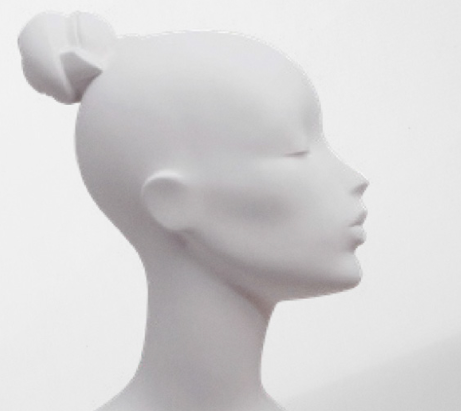
Walk into any serious hair salon, wig boutique, or makeup studio and there is a particular kind of clutter that gives the space its credibility. Rows of heads, each doing a specific job. Not decoration. Not props. Working tools that solve problems which sound minor until you have worked without them. Mannequin heads sit in this odd category of professional equipment that gets taken for granted by those who use them daily and underestimated by everyone else. Understanding what they actually do changes how both retailers and practitioners think about their work.
Retail Display Shapes Decisions
A wig folded in a box tells a customer almost nothing useful. The same wig on a well-positioned display head answers the questions that actually drive purchasing — how does it sit at the hairline, how does the volume distribute, does the length flatter or overwhelm. Customers make these assessments faster than they realise, and they make them visually before they ever reach out to touch the product. Shops that display hairpieces flat or in packaging consistently see more handling, more hesitation, and more returns. Those that present product on heads at eye level see customers who arrive at a decision with considerably more confidence. The display is doing sales work that no label description can replicate.
Why Training Heads Accelerate Learning
Hair education has an awkward structural problem. The techniques students most need to repeat — precise graduation, clean elevation, consistent tension — are exactly the ones hardest to practise on a live model without causing discomfort. A model in the chair cannot offer unlimited patience for a student who needs to attempt the same section repeatedly. Mannequin heads remove that constraint entirely. The student works at their own pace, makes mistakes without consequence, and builds the physical memory that only comes from repetition done without pressure. Instructors can also demonstrate on a head that holds its position indefinitely — something a live model simply cannot do.
Wig Storage Is a Genuine Craft
Most people who wear wigs regularly have at some point pulled one from a bag and spent a long time trying to coax it back into shape. Wigs stored improperly — folded, compressed, left in warm spaces — develop a memory for the wrong shape. The fibres tangle at stress points, the cap structure distorts, and what was once a natural-looking piece starts to read as something treated carelessly. Storing wigs on correctly sized heads between wears is not precious behaviour. It is simply the practice that extends the working life of the piece and means it is ready to wear rather than needing rehabilitation every time it comes out.
Makeup Practice Needs a Still Subject
There is a specific frustration that makeup artists encounter when practising complex techniques on willing friends or models. The subject moves, reacts, needs breaks, and cannot hold an expression indefinitely. Avant-garde editorial work, intricate eye detailing, and contouring that requires assessment from multiple angles all benefit from a subject that holds position without negotiation. Professional mannequin heads designed for makeup practice allow artists to photograph their work mid-application, step back and assess without time pressure, and revisit sections without the social awkwardness of asking a person to stay still for an uncomfortable stretch of time.
Matching Head to Purpose
This is where purchasing decisions most often go wrong. A foam display head purchased for its low weight will not tolerate the heat of styling tools or the tension of repeated pinning. A canvas block designed for wig work has a surface texture that makes makeup application misleading as practice. Silicone training heads with accurate facial anatomy serve the makeup artist well but have no relevance to a hairdresser working on cut and colour techniques. Buying without matching the head to the specific task produces tools that frustrate rather than assist. It leads to the mistaken conclusion that the equipment does not work — when the real issue is simply that the wrong type was chosen.
Conclusion
The professionals who get the most from their tools are generally the ones who chose them deliberately rather than incidentally. Mannequin heads, selected for the right application and used consistently, quietly underpin a standard of work that clients and customers notice without necessarily knowing why. The product looks better. The technique improves faster. The results hold up over time.
