
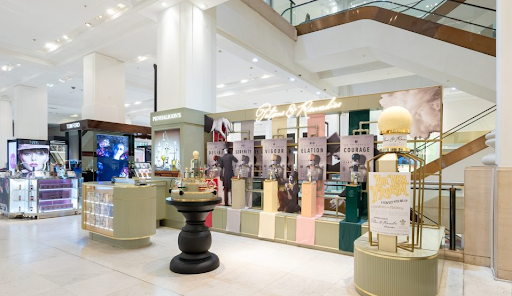
Most retailers who attempt a fit-out without professional help make the same mistake. They treat the space as a backdrop — somewhere to arrange products attractively and keep the lighting reasonable. What they miss is that the space itself is doing selling work, whether it has been designed to or not. A poorly considered environment actively undermines good products. A well-designed one makes average products feel desirable. This is the territory where a retail design agency earns its place — not decorating a room, but engineering a commercial outcome from the floor up.
Briefs Are Starting Points, Not Answers
Retailers come to agencies with briefs that describe symptoms rather than causes. “We need more storage.” “The space feels dated.” “Customers aren’t spending long enough inside.” These are real observations, but they rarely identify the actual problem. A request for more storage often conceals a merchandising strategy that is working against itself — too much product, too little hierarchy, nowhere for the eye to rest. An agency that simply delivers what was asked for has technically done its job. One that pushes back, asks uncomfortable questions, and reframes the problem entirely is the one worth hiring. The brief is where the conversation starts, not where it ends.
The Psychology Behind Where People Walk
There is a reason why certain products in well-run shops get touched constantly whilst others, stocked directly besides them, are ignored entirely. It is almost never about the product. It is about position, sightline, and the unconscious decision a customer makes within seconds of entering a space about which direction feels natural to walk. A retail design agency that has studied customer movement patterns across different retail formats understands how to place things so they get seen — not just displayed. Decompression zones, the instinctive right-turn bias that most shoppers exhibit, the way ceiling height affects browsing pace — these are not theories. They are observable behaviours that a well-briefed designer uses deliberately.
Brand Consistency Is Not What Most Retailers Think
Ask most retailers whether their brand is consistent, and they will point to their logo, their colours, and perhaps their packaging. In a physical environment, brand consistency is a different and more demanding problem. It means the fixture finish does not contradict the price point the brand is trying to occupy. It means the typeface on the handwritten-style shelf label does not jar against the precision of everything else in the space. It means the music tempo, the scent, the surface underfoot — all of it is pulling in the same direction. Retail design agencies work on this level of detail not because it is obvious, but precisely because it is not. The customer never consciously notices it. They simply feel either trust or unease and act accordingly.
Constraints Produce Better Work Than Freedom
The retail spaces that end up most distinctive are rarely the ones built in perfect, column-free, generous-ceilinged rooms. They are the ones where a Victorian building had a structural wall that refused to move or a mezzanine with awkward headroom that could not be altered. Experienced agencies do not negotiate with constraints — they use them. A column that cannot be removed becomes the anchor point around which a feature display is built. A low-ceilinged section becomes the intimate, enclosed corner that higher-end product lines actually benefit from. Blank canvases produce safe work. Difficult buildings produce memorable ones in the right hands.
Conclusion
A retail design agency does not simply make spaces look better — it changes what those spaces are capable of achieving commercially. The retailers who discover this tend to do so after one fit-out that underperformed despite looking perfectly reasonable on a mood board. What was missing was not budget or effort. It was the kind of thinking that comes from having designed enough retail environments to understand where the real decisions are being made and what happens when they are made badly. That knowledge is genuinely difficult to acquire any other way, and its absence has a habit of showing up in the trading figures long before anyone thinks to look at the design.
