
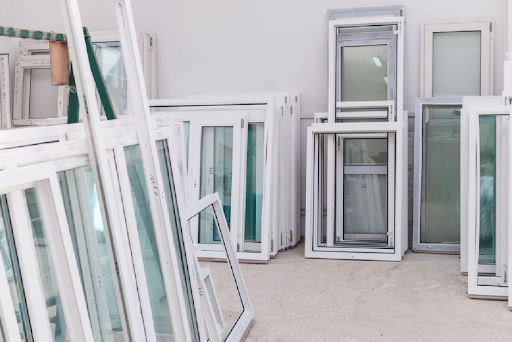
Windows fail quietly. Not all at once, not dramatically — they degrade in ways that take months or years to become undeniable. The seal between panes clouds over. The frame shifts just enough to break the weather barrier. The draught appears in the first cold snap and never fully disappears. By the time any of this surfaces, the supplier has been paid, the warranty conversation has become adversarial, and the options for resolution are limited and expensive. Window suppliers look remarkably similar during the quoting process. The differences emerge later, and they emerge in the building — which is exactly the wrong place to discover them.
Narrow Range Is a Warning
A supplier who stocks a limited product range is not offering simplicity. They are asking the building to accommodate the product rather than the other way around. Windows need to match the specific thermal exposure, acoustic environment, and structural conditions of each opening — and those variables differ considerably between a north-facing living room, a west-facing bedroom, and a bathroom adjacent to a busy road. A supplier with genuine range has invested in understanding that diversity. One without it fills the gap with persuasion rather than specification.
Glazing Is Where Performance Lives
The frame attracts attention during selection because it is visible. The glazing unit determines whether the window actually performs. Double glazing is not a single specification — it is a category containing meaningful variation. The gap width between panes, the gas fill, the presence and type of low-emissivity coating, and the spacer material at the edge all interact to determine thermal resistance and acoustic attenuation. Window suppliers who can walk through these variables and match the glazing specification to the orientation and climate exposure of each window in a project understand the product. Those who offer double glazing as a single undifferentiated option are selling a category name, not a performance outcome.
Lead Times Are a Reputation Test
Custom windows are manufactured to order and sit on the critical path of every project they are part of. Every trade working after window installation — plastering, painting, finishing, cabinetry — depends on the windows arriving when quoted. A supplier whose lead time estimates are consistently accurate is protecting the programme of every project they supply. One whose estimates are optimistic — calibrated to win orders rather than reflect manufacturing reality — creates delays that compound through every subsequent trade. The way to find this out is not to ask the supplier. It is to ask builders who have ordered from them multiple times.
Warranty Documents Are Diagnostic Tools
Suppliers confident in their products write warranties that reflect that confidence. Seal integrity, frame stability, hardware durability, and finish longevity should each be covered with terms that extend meaningfully past installation. Window suppliers who limit warranty coverage to materials only, exclude consequential damage, or build the claims process around forms and waiting periods rather than responsiveness are communicating their expectation of how often things go wrong. A warranty document read before purchase is information. Read after a problem has emerged, it is ammunition — for whoever drafted it more carefully.
Installation Details Outlast the Sale
A window installed without correct flashing at the head, without adequate sill drainage, or without proper expansion allowance in the frame will underperform regardless of product quality. Water finds its way through installation errors over years in ways that are genuinely difficult to diagnose and expensive to fix. Suppliers who provide detailed installation documentation, who train the trades working with their products, and who treat installation quality as part of their product responsibility understand the full lifecycle of what they are selling.
Climate Specificity Is Not Marketing
Australia’s thermal conditions are not uniform, and a glazing specification appropriate for Melbourne’s temperature swings performs differently in Brisbane’s humidity or Hobart’s cold. Suppliers with genuine local knowledge recommend specifications matched to actual conditions. Those working from national catalogues recommend whatever moves most easily across the broadest market — which is not the same thing.
Conclusion
Window suppliers determine far more of the long-term outcome than the product specifications alone suggest. Lead time reliability, glazing knowledge, installation support, warranty integrity, and after-sales conduct all shape what the building actually lives with across decades. The quoting process rarely reveals these differences. References from builders who have used the supplier repeatedly, across multiple projects, under varying conditions — that is where the truth about a supplier’s actual performance consistently surfaces.
