
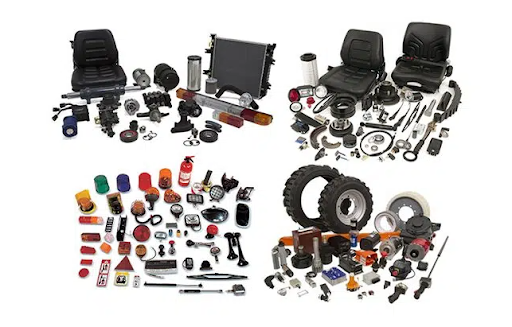
Forklifts take a beating every single day. Forklift parts carry heavy loads, navigate tight spaces, and rarely stop moving during a full shift. Most operations only pay attention to them when something breaks — and by that point, the damage is already done. What goes wrong is rarely the obvious failure. It is usually the quiet accumulation of small compromises that nobody noticed until they became expensive.
The Hidden Cost of “Close Enough”
Aftermarket components look acceptable on the shelf. The dimensions appear right, the price is lower, and the lead time is shorter. That combination is hard to argue against when a machine is sitting idle and the pressure to get it running again is real. But the problem with “close enough” is that forklifts are not forgiving machines. A hydraulic seal running outside its designed tolerance does not fail immediately — it weeps slowly. Maintenance teams log it as normal wear and move on. Months later, the cylinder gives out entirely, and nobody traces it back to that one inexpensive replacement.
Mast Wear Is Underestimated Everywhere
When warehouse managers are asked where forklifts fail most often, the usual answers are tyres, batteries, and hydraulics. The mast rarely comes up. Yet mast wear quietly causes more operational disruption than most people acknowledge. The rollers, channels, and chains inside a mast assembly absorb enormous stress with every lift cycle. When worn rollers are swapped out for ill-fitting substitutes, mast drift increases and load control becomes inconsistent. Operators start making small compensatory adjustments without flagging it as a problem. That is precisely the kind of gradual drift that precedes serious incidents.
What Genuine Components Actually Deliver
The difference genuine forklift parts make is not simply about shape or size — it goes deeper than that. Genuine components are manufactured to specific material hardness ratings, heat treatments, and surface tolerances that determine how a part behaves under sustained operational stress. A drive axle shaft, for example, is engineered to flex within a defined range and return to its original state. A softer aftermarket equivalent deforms slightly more under an equivalent load. That difference is invisible in the short term. Over time, it affects alignment, accelerates wear on adjacent components, and produces failures that appear unrelated to the original substitution.
Planned Servicing Versus Reactive Chaos
There is a real operational difference between a maintenance programme that runs predictably and one that is constantly firefighting. When quality forklift parts are fitted consistently, service intervals become reliable. Engineers can build replacement schedules around components that behave as expected under known operating conditions. That turns maintenance into a controlled programme rather than a series of unplanned responses. Operations that maintain structured servicing regimes experience far less cumulative downtime than those constantly reacting to unexpected breakdowns — and the difference compounds significantly over the working life of a fleet.
Operator Behaviour Tells the Real Story
Experienced forklift operators rarely file formal complaints about machinery that feels slightly off. Instead, they adapt. A brake pedal with unusual travel, a steering response that feels vague, a mast that hesitates fractionally on the way up — operators absorb these signals and adjust their behaviour accordingly. They slow down, avoid certain manoeuvres, and develop working habits that quietly mask the underlying problem. Productivity drops. Safety margins narrow. Nobody connects it to the components. Fitting genuine replacements that restore a machine to its original operating characteristics gives operators back the confidence to work properly, without unconsciously compensating for a machine that is no longer performing as it should.
Conclusion
The case for genuine forklift parts does not rest on brand preference — it rests on how industrial equipment actually fails. Failures rarely arrive without warning. They build through small compromises, minor tolerances, and components that introduce just enough variance to shift stress onto surrounding parts over time. Operators change their behaviour. Maintenance teams chase symptoms rather than causes. Reliability erodes gradually until a breakdown forces the issue. Businesses that treat parts as a serious operational decision — rather than a procurement afterthought — find that their machines last longer, their maintenance schedules become more predictable, and their warehouse floors keep moving the way they need to.
